Kraken Prop trading guide: how it works, benefits and risks
Kraken Prop launched on May 27, 2026. Learn how its paid evaluation, simulated trading, profit split and loss limits work, plus the risks to check before joining.
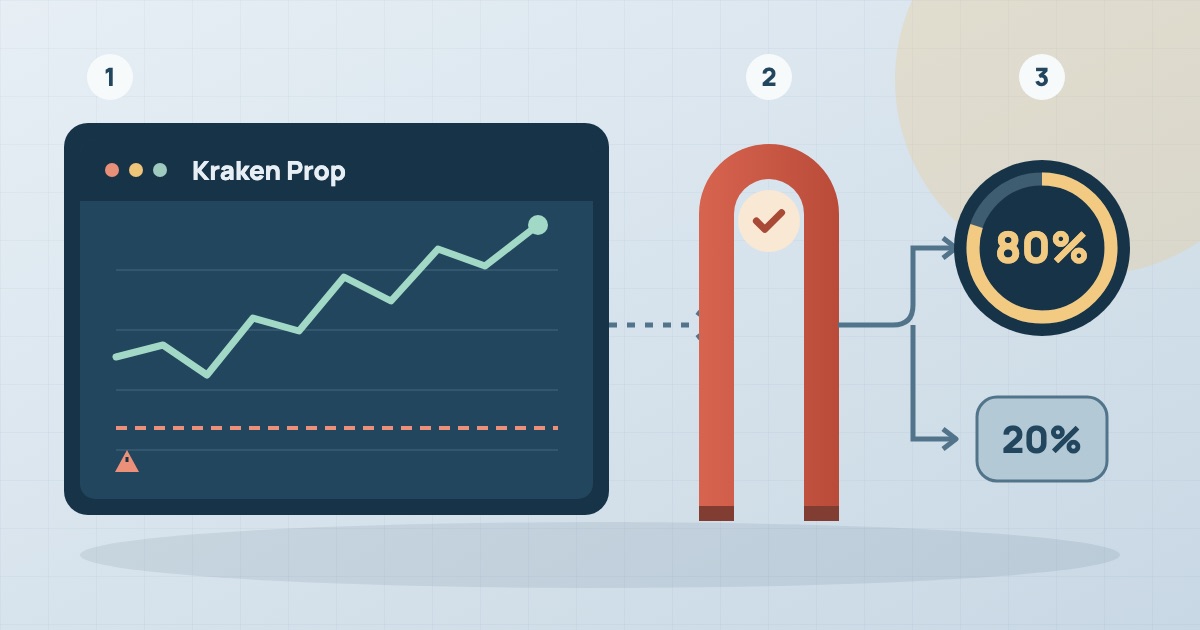
A large account balance on a Prop screen is not money you can withdraw. Before paying for a challenge, understand what that balance represents, how you qualify for payouts and which losses can close the account. This independent guide checks Kraken's published rules as of November 10, 2026.
1. What is Kraken Prop?
Kraken Prop is a proprietary trading programme inside Kraken Pro. You pay for an evaluation, trade a simulated account and try to reach a profit target within loss limits. Passing makes you eligible for a funded account and a share of qualifying profits. Kraken's newer disclosures clarify that participants supply trading signals, hold no real positions and receive real payouts based on simulated performance. The advertised capital is not your property or a withdrawable deposit.
2. When did it launch?
Kraken announced the launch on May 27, 2026. Later updates matter: on August 18 it announced leverage of up to 10x for Bitcoin, Nasdaq 100 and S&P 500; on October 29 it announced six commodity markets and lower non-crypto commissions, with a Lite-plan exception. Neither update changes the original launch date. Some general pages still show older figures, so check the terms of your selected plan and instrument.
3. How do you use it?
Open Kraken Pro and choose Prop on the web, or Prop trading in the mobile account selector. Check regional eligibility before paying. Choose an account size and evaluation plan, then read its target, loss limits, price and agreements. Advertised sizes range from 5,000 to 200,000 USD. The FAQ sets a combined 200,000 USD cap across active evaluation and funded accounts. Basic email and country verification allows card purchases; paying with your Kraken balance requires full identity verification.
During evaluation, watch account equity, including unrealised profit and loss. Reaching the target closes positions automatically. Breaching maximum daily loss (MDL) or maximum drawdown (MDD) closes positions and pending orders and disables trading. MDL resets at 00:30 UTC; MDD does not reset daily. After passing, complete identity verification, sign the funded trader agreement and await manual approval before trading the funded account.
For a payout, first close all positions and cancel all orders so balance equals equity. In the funded account's portfolio, request an amount within the available payout. It goes to your Kraken account after review; external withdrawal is a separate step under Kraken's withdrawal rules. Evaluation profits cannot be withdrawn.
4. What are the benefits?
You can qualify for a larger trading allocation without depositing that full amount yourself. Kraken says it covers programme trading losses; your direct financial exposure is the evaluation fee. Evaluations have no time limit, and web and mobile use Kraken Pro. The standard trader profit share is 80%. A 90% share is an optional upgrade purchased with the evaluation for an extra 20% of its base price. None of this guarantees a payout.
5. What are the risks?
The fee is real even when trading is simulated. Kraken says most applicants fail their first attempt and evaluation fees are non-refundable once trading begins. Repeated attempts add costs. Open losses and fees can breach a limit before you close a trade. For illustration, a 0.3% adverse move on a 100,000 USD position loses 300 USD before costs; a large displayed balance does not mean you can lose that whole balance.
Costs also reduce the room left before a breach. The general fee guide lists crypto commission at 0.04% per side and margin funding at 0.033% per day, charged every four hours on open notional exposure. The October 29 update cuts non-crypto commission to 0.02% per side on plans other than Lite; Lite rates are unchanged. Check the instrument's current charges, spread and position cap before placing an order.
Kraken describes Prop as an unregulated service. A funded label does not give you ownership of the provider's assets or positions, and payout rights depend on the agreement and review. Platform outages, execution differences and eligibility changes can also affect your trading and payouts. Do not assume the protections of another Kraken product apply here.
6. What should you check before paying?
First test whether your strategy can stay inside the actual loss limits after fees. Set a total budget for evaluation attempts and stop when it is exhausted. Choose a plan by its loss allowance and target, not just its headline balance. Keep individual positions small enough to leave room for costs and adverse moves. Save the rules you accepted, check the daily reset time in your timezone and review your remaining risk allowance after a payout.
On the review date, Kraken's FAQ and product overview both said Prop is unavailable to users in India and Canada; the commodity markets were also unavailable in the UAE. Eligibility can change, so verify the current agreement and your account's eligibility with Kraken before you buy. If your strategy needs automation, the public Prop page currently says API access is unavailable.
Sources
- Kraken Blog: Kraken Prop launch announcement ↗
- Kraken Support: What is Kraken Prop? ↗
- Kraken Support: Buying an evaluation ↗
- Kraken Support: Evaluation rules and loss limits ↗
- Kraken Support: Eligibility, profit splits and account limits ↗
- Kraken Support: Requesting a payout ↗
- Kraken Support: Trading and funding fees ↗
- Kraken Blog: August 2026 leverage update ↗
- Kraken Blog: October 2026 commodities and commission update ↗
- Kraken: Prop plans and service disclosures ↗
KRAKEN REFERRAL CODE 2026
| Product | Trading Rebate |
|---|---|
| Spot Trading | 20% |
| Margin Trading | 20% |
| Futures | 20% |
| Tokenized Equity | 20% |
| PTL Trading | 20% |
| Prop, first purchase | 20% |
| Rollover | 20% |
| Options | 20% |
Available rewards are confirmed during registration.
We may earn a commission when you use this link, at no extra cost to you. Terms and regional restrictions apply.