Kraken Wallet: a self-custody multichain wallet
Kraken Wallet is a self-custody wallet for tokens, NFTs and DeFi on Bitcoin, Ethereum, Solana and other networks, with seed-phrase wallets or email, Apple and Google sign-in.
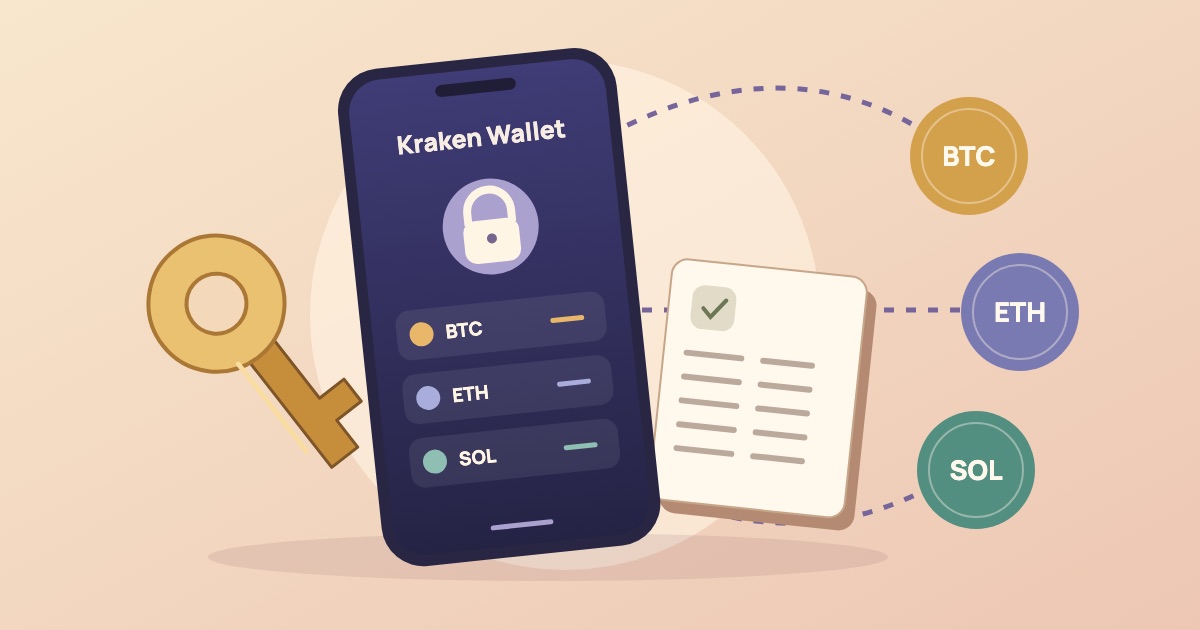
Kraken Wallet is a self-custody wallet for managing blockchain assets and using decentralized applications.
Product overview
Kraken publicly launched Kraken Wallet on April 17, 2024, with support for eight networks. A September 16, 2026 update added further wallet options and DeFi tools.
Managing assets across networks
It brings tokens, NFTs and supported DeFi positions into one interface, reducing the need to check separate apps for each network. You can send assets and connect to decentralized applications through WalletConnect. Creating or importing a seed phrase wallet does not require a Kraken exchange account; connecting to exchange services requires an eligible account.
Self-custody and key management
Kraken Wallet is self-custodial, while the Kraken exchange holds assets in customer accounts. With a seed phrase wallet, you control the recovery phrase and private keys. Kraken cannot recover that phrase or reverse transactions. Recovery requires the phrase or a password-encrypted cloud backup; Kraken cannot recover the backup password either.
The current app also offers embedded wallets accessed through supported sign-in methods, such as email, Apple or Google. Kraken describes these as self-custodial too: private keys can be exported, but their protection relies on the wallet provider’s secure infrastructure. This differs from keeping keys locally. Understand the sign-in, recovery and key-export process before choosing.
Swaps, DeFi and security features
Multichain access covers Bitcoin, Ethereum, Solana and other supported networks. Support varies by wallet type: embedded wallets do not support Dogecoin or Blast. The 2026 update includes swaps that compare quotes across seven providers, cross-chain routes and access to eligible DeFi Earn vaults. A built-in dApp browser and exchange connection reduce the steps needed to move between services. Fees and regional restrictions apply.
Kraken said at launch that the wallet’s code was published on GitHub and that Trail of Bits audited it. Kraken also describes transaction simulation, malicious-interaction blocking and dApp origin verification before signing. These tools help you inspect permissions and expected effects; open code, audits and warnings do not guarantee that every transaction is safe.
Self-custody also means taking responsibility for access and approvals. Keep recovery details private, check the address and network, and test a small transfer first. DeFi returns are variable and can involve loss of principal; contracts and bridges introduce additional risks. A token appearing in the wallet is not a Kraken endorsement.
Sources
KRAKEN REFERRAL CODE 2026
| Product | Trading Rebate |
|---|---|
| Spot Trading | 20% |
| Margin Trading | 20% |
| Futures | 20% |
| Tokenized Equity | 20% |
| PTL Trading | 20% |
| Prop, first purchase | 20% |
| Rollover | 20% |
| Options | 20% |
Available rewards are confirmed during registration.
We may earn a commission when you use this link, at no extra cost to you. Terms and regional restrictions apply.